A metal ball drops from the top of a vertical board, bounces off dozens of pins, and lands somewhere completely unpredictable. That single mechanic has kept players hooked for decades, and its digital descendant - Crazy Pachinko - has turned that same principle into one of the more addictive online casino games available today. The appeal isn't complexity; it's the opposite. The rules are simple enough to grasp in minutes, yet the outcome always carries a jolt of uncertainty that keeps hands hovering over the drop button.
What separates casual players from consistent ones isn't luck alone - it's understanding how the board behaves and where to place bets before dropping a single ball. For those ready to see the mechanics in action, how to play crazy pachinko is a good starting point before committing real money. Once the physical logic of ball drops and multiplier zones clicks, the game stops feeling random and starts feeling like a system worth studying.
This guide breaks down everything worth knowing: the mechanics behind the board, the exact rules governing payouts, practical betting approaches, and the differences between playing in a physical setting versus an online casino environment. By the end, the goal is simple - you'll know exactly what you're doing before that first ball drops.
Understanding Crazy Pachinko: Origins and Core Concept
Pachinko traces its roots to Japan, where it started as a mechanical arcade pastime long before casinos adopted a simplified, gamified version for online play. The original machines were dense with pins, springs, and physical balls - closer to a vertical pinball machine than a casino game. Crazy Pachinko keeps the visual DNA of that origin but strips away the mechanical complexity, replacing it with a digital board built for speed and clear payout logic.
From Arcade Halls to Casino Screens
Traditional pachinko parlors operate on a different premise: players buy balls, feed them into the machine, and try to land them in scoring pockets to win more balls, which can later be exchanged for prizes. Crazy Pachinko borrows the falling-ball visual but converts everything into direct cash multipliers. There's no ball economy to manage - just a drop, a bounce pattern, and a result.
Why the Game Attracts Modern Players
The format works because it demands almost no learning curve while still delivering visual suspense. Watching a ball ricochet unpredictably before settling into a multiplier slot triggers the same anticipation as a roulette wheel slowing down. Add in adjustable bet sizes and multiple risk levels, and you get a game that appeals equally to cautious players and high-risk bettors.
How to Play Pachinko: Step-by-Step Basics
Learning how to play pachinko in its digital casino form takes less time than reading a menu. The board is fixed, the pins don't move, and your only real decisions happen before the ball drops.
Setting Your Bet and Risk Level
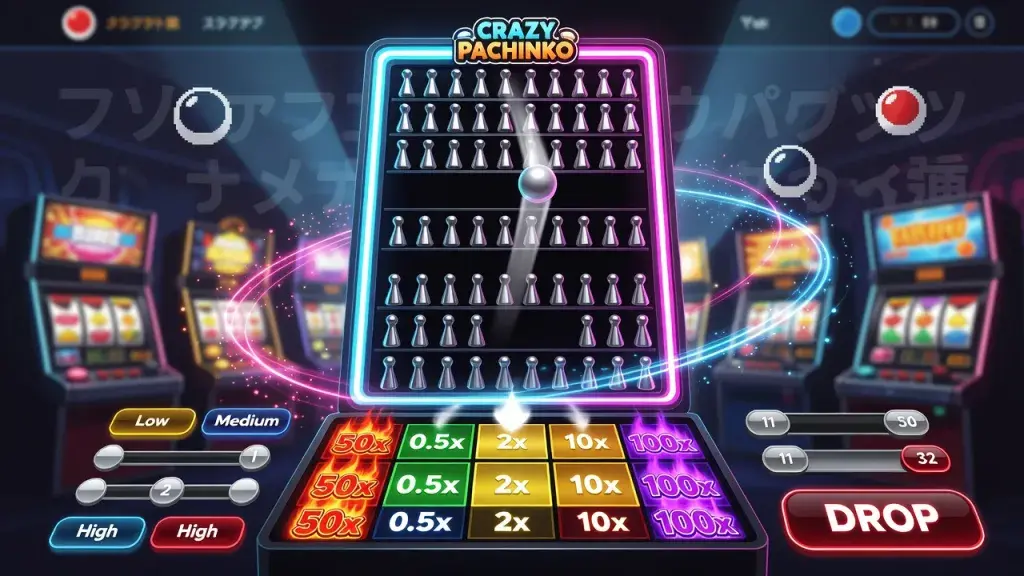
Before each round, players choose a bet amount and often a risk category - low, medium, or high. This choice determines how the multiplier values are distributed across the board. Higher risk settings push extreme multipliers to the edges while leaving modest or even zero-multiplier slots in the middle, creating bigger swings in outcome.
Dropping the Ball
Once the bet is locked in, the ball releases from a fixed point at the top of the board. Gravity and pin placement determine its path - there's no user input during the drop itself. This is where the game diverges sharply from skill-based titles: nothing you do after release changes the trajectory.
Reading the Multiplier Zones
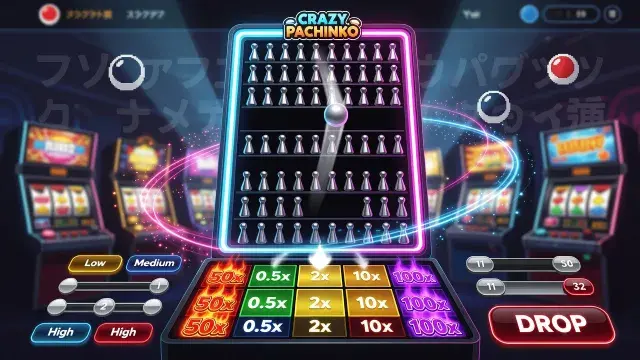
At the bottom of the board sit numbered slots, each representing a payout multiplier applied to your original bet. Center slots typically carry lower multipliers because the ball statistically lands there more often, while edge slots carry the largest multipliers precisely because they're harder to hit.
Crazy Pachinko Game Rules Explained
Every version of this game follows a consistent rule set, even though visual themes and multiplier ranges can differ between platforms.
Board Layout and Pin Distribution
The pins are arranged in staggered rows, forcing the ball to change direction repeatedly before reaching the bottom. This layout isn't decorative - it's what creates the randomized bounce pattern that makes each drop unique, even from the same starting position.
Payout Table Mechanics
Each multiplier slot corresponds to a specific payout, clearly displayed before you place a bet. Unlike some casino games where payout structures feel opaque, Crazy Pachinko typically shows the full range upfront, from the lowest multiplier near the center to the highest at the far edges.
Return-to-Player Considerations
Like any casino-style game, Crazy Pachinko operates on a built-in house edge, expressed through its return-to-player percentage. This figure doesn't guarantee individual results, but it does describe the long-term mathematical behavior of the game across thousands of rounds.
- Board pins remain fixed - no player interaction alters ball direction mid-drop
- Multiplier values are displayed before each bet is confirmed
- Risk level settings directly influence multiplier distribution across the board
- Outcomes are generated using certified random number systems in online versions
Crazy Pachinko Strategy: Betting Approaches That Work
There's no way to control where the ball lands, but a solid crazy pachinko strategy isn't about controlling physics - it's about managing exposure and expectations.
Bankroll-Based Bet Sizing
Treat each session with a fixed bankroll and divide it into small, consistent bet units rather than large, sporadic wagers. This approach extends playtime and reduces the chance of exhausting your budget on a single unlucky sequence of center-slot landings.
Matching Risk Level to Session Goals
Low-risk settings produce smaller, more frequent wins - useful for players who want longer sessions with steadier balance movement. High-risk settings suit players chasing large multipliers who accept longer stretches without a payout in exchange for occasional big hits.
Avoiding the Pattern Trap
Because the board looks structured, it's tempting to believe you can spot patterns in where balls land. Each drop is statistically independent. Betting more after a string of losses in hopes of a "correction" ignores how the random distribution actually works.
Pachinko Tips and Tricks for Consistent Play
Beyond raw betting strategy, a handful of practical habits separate players who enjoy the game sustainably from those who burn through funds quickly.
Set Session Limits Before You Start
Decide on both a loss limit and a win target before dropping a single ball. Walking away at a predetermined point removes emotional decision-making from the equation, which is often where losses accelerate.
Use Demo Modes to Study Multiplier Distribution
Most platforms offer a free-play version. Spend time there observing how often balls land in center versus edge slots under different risk settings before wagering real money.
Track Your Sessions
Keeping a simple log of bet size, risk level, and outcome across sessions reveals your actual long-term results more accurately than memory alone. Players consistently overestimate wins and underestimate losses without a written record.
Online Pachinko Gameplay: What to Expect on Digital Platforms
Playing online introduces a few structural differences from the arcade original, and understanding them helps set realistic expectations.
Speed and Round Frequency
Digital versions move considerably faster than physical machines. A round that might take a minute at a physical parlor completes in seconds online, which means bankroll management matters even more since you can play far more rounds per hour.
Fairness and Random Number Verification
Licensed online casinos use certified random number generators to determine ball paths, and reputable platforms publish independent audit information confirming this. This is fundamentally different from the physical mechanics of arcade pachinko, where actual gravity and pin placement determine results.
Mobile Accessibility
Because the game requires no complex input during play, it translates well to mobile screens. Bet selection, risk adjustment, and ball drop all work smoothly with simple taps, making it one of the more mobile-friendly casino formats available.
Frequently Asked Questions
Is Crazy Pachinko a game of skill or pure chance?
It's pure chance once the ball is released. Your only meaningful decisions happen beforehand - bet size and risk level. Nothing you do during the drop affects the outcome.
What's the difference between low, medium, and high risk settings?
These settings change how multipliers are distributed across the board. Low risk spreads moderate multipliers more evenly, while high risk concentrates extreme values at the edges and leaves the center slots with minimal or zero payout.
Can I predict where the ball will land based on previous drops?
No. Each drop is an independent event with no memory of prior outcomes. Believing in patterns after a losing or winning streak is a common misconception that leads to poor betting decisions.
How is online Crazy Pachinko different from traditional Japanese pachinko parlors?
Traditional pachinko involves physical balls, mechanical machines, and a ball-exchange prize system. The online casino version simplifies this into direct cash multipliers generated by certified software, with no physical balls or exchange process involved.
What bankroll management approach works best for this game?
Divide your total budget into small, fixed bet units and set clear win and loss limits before playing. This keeps sessions sustainable and prevents emotional betting after a losing streak.
Are online Crazy Pachinko results actually fair?
On licensed platforms, yes. These sites use certified random number generators, and reputable operators undergo independent audits to verify that outcomes aren't manipulated in favor of the house beyond the disclosed return-to-player percentage.